

How to Write a CV in South Africa: Complete 2025 Guide with Examples
How to write a winning CV in South Africa with step-by-step guide, professional examples, templates & expert tips. Get noticed by employers in 2025.
How to Write a CV in South Africa: Guide with Examples
Creating a compelling CV is your first step toward landing your dream job in South Africa’s competitive employment market. Whether you are a fresh graduate, experienced professional, or career changer, this comprehensive guide will show you exactly how to craft a CV that gets results.
What Makes a South African CV Different?
South African CVs follow unique conventions shaped by local employment practices and the country’s diverse business culture. Unlike American resumes which are typically one page, South African CVs are usually 2-3 pages and include more detailed personal information. Understanding these distinctions is crucial for creating a document that resonates with local recruiters and hiring managers.
Read Also: Tourism Industry CV Tips: 2025 Guide to Writing Winning Resumes for Travel & Hospitality Jobs
Key differences include:
- Length: 2-3 pages vs 1-page resumes
- Personal information: ID numbers and detailed references expected
- Format: More comprehensive detail required
- Language skills: Emphasized due to South Africa’s multilingual environment.
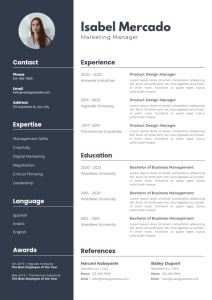
Essential Components of a South African CV
Personal Details Section
Your personal information should appear at the top of your CV. In South Africa, employers expect more detail than in many other countries:
Include: Full name, contact number, professional email address, physical address (at least city and province), nationality, and ID number. Some candidates also include their date of birth, though this is becoming less common due to anti-discrimination practices.
Professional email format: Use firstname.lastname@provider.com rather than nicknames or outdated email addresses.

Professional Summary or Personal Statement
This 3-4 sentence paragraph appears directly below your personal details and serves as your elevator pitch. Focus on your most relevant skills, years of experience, and what you bring to the role.
Example for a Marketing Professional: “Results-driven marketing professional with 6 years of experience in digital strategy and brand management across FMCG and retail sectors. Proven track record of increasing brand engagement by 45% and managing campaigns with budgets exceeding R2 million. Seeking to leverage data analytics expertise and creative problem-solving skills to drive growth for a forward-thinking organization.”
Education Section
List your qualifications in reverse chronological order, starting with the most recent. For each qualification include the institution name, degree or diploma obtained, dates attended, and major subjects or specializations.
Format example:
Bachelor of Commerce in Accounting
University of Cape Town
2018 - 2021
Major subjects: Financial Accounting, Auditing, Taxation
For recent graduates, include notable achievements like cum laude distinctions, dean’s list recognition, or relevant coursework. If you’ve been working for more than 5 years, keep education details concise and move this section below your work experience.
Work Experience Section
This is the most critical section of your CV. List positions in reverse chronological order with company name, your job title, employment dates, and 4-6 bullet points describing your responsibilities and achievements.
Use the STAR method for bullet points:
- Situation: What was the context?
- Task: What needed to be done?
- Action: What did you do?
- Result: What was the measurable outcome?
Example for a Sales Manager:
Sales Manager
ABC Retailers (Pty) Ltd, Johannesburg
March 2020 - Present

- Managed a team of 12 sales representatives across 3 Gauteng branches, improving team productivity by 32% through implementation of performance tracking systems
- Increased regional sales revenue from R8.5 million to R12.3 million annually by developing targeted customer acquisition strategies
- Negotiated contracts with 15 new corporate clients, generating R2.1 million in additional revenue
- Reduced customer churn rate from 18% to 11% by introducing a comprehensive after-sales support program
- Trained and mentored 8 junior staff members, with 5 receiving promotions within 18 months
Skills Section
Divide your skills into relevant categories that match your industry. South African employers particularly value both technical competencies and soft skills.
Example for an IT Professional:
Technical Skills: Python, Java, SQL, AWS Cloud Services, Docker, Git, Agile/Scrum methodologies Software: Microsoft Office Suite, Salesforce, SAP, JIRA, Tableau Languages: English (fluent), Afrikaans (conversational), Zulu (basic) Soft Skills: Team leadership, project management, stakeholder communication, problem-solving
Additional Sections
Languages: South Africa’s multilingual environment makes language skills particularly valuable. List each language and your proficiency level.
Certifications and Professional Development: Include relevant industry certifications, licenses, or training programs with completion dates.
Achievements and Awards: Highlight recognition received in professional or academic settings.
Volunteer Work: Particularly relevant if you have limited work experience or if the volunteer work demonstrates transferable skills.
References: Unlike many countries where “references available upon request” is standard, South African CVs often include 2-3 references with full contact details. Include the person’s name, job title, company, relationship to you, phone number, and email address. Always ask permission before listing someone as a reference.
Step-by-Step Guide to Writing Your South African CV
Step 1: Research the Job and Industry
Before writing a single word, thoroughly review the job advertisement and research the company. Identify keywords from the job description and industry-specific terminology you should incorporate. South African employers often use Applicant Tracking Systems (ATS) that scan for relevant keywords, so alignment with the job description is essential.
Step 2: Choose the Right CV Format
Chronological CV: Best for candidates with consistent work history in the same field. Lists experience from most recent to oldest.
Functional CV: Emphasizes skills over work history. Useful for career changers or those with employment gaps.
Combination CV: Merges both formats, highlighting skills while providing chronological work history. Increasingly popular in South Africa.
For most South African job seekers, the chronological or combination format works best.
Step 3: Create a Professional Header
Design a clean, professional header with your contact information. Avoid elaborate graphics or photos unless applying for creative roles. South African CVs don’t typically include photographs, and including one can sometimes work against you due to potential bias.
Step 4: Write a Compelling Professional Summary
Craft your summary after completing the rest of your CV. This allows you to identify your strongest selling points. Keep it concise, specific, and tailored to the position you’re applying for.
Step 5: Detail Your Work Experience
For each position, focus on achievements rather than just duties. Quantify results wherever possible using percentages, rand amounts, or other measurable metrics. South African employers respond well to concrete evidence of your impact.
Start bullet points with strong action verbs: managed, developed, implemented, achieved, increased, reduced, streamlined, negotiated, led, coordinated.
Step 6: Optimize for ATS Systems
Many South African companies use ATS software to filter CVs. To ensure your CV passes through:
- Use standard section headings (Education, Work Experience, Skills)
- Avoid tables, text boxes, headers, and footers
- Save as a PDF unless the job posting specifically requests a Word document
- Include keywords from the job description naturally throughout your CV
- Use standard fonts like Arial, Calibri, or Times New Roman
- Keep font size between 10-12 points
Step 7: Proofread and Polish
Spelling or grammatical errors can immediately disqualify your application. Proofread multiple times, use spell check, and have someone else review your CV. Pay special attention to South African spelling conventions (which generally follow British English) and local terminology.
Step 8: Tailor for Each Application
Never send a generic CV. Customize your professional summary, highlighted skills, and even bullet points to match each specific job application. This extra effort significantly increases your chances of securing an interview.
Sample CV Templates
Sample 1: Entry-Level Graduate CV
THABO MOKOENA
073 456 7890 | thabo.mokoena@email.com
123 Main Road, Sandton, Johannesburg, 2196
ID Number: 9801155234089

PROFESSIONAL SUMMARY
Motivated BCom Accounting graduate with distinction from University of Pretoria, complemented by internship experience at a Big Four accounting firm. Strong analytical skills with proficiency in financial reporting, tax compliance, and audit procedures. Eager to contribute to a dynamic accounting team while pursuing articles toward CA(SA) qualification.

EDUCATION
Bachelor of Commerce in Accounting (Distinction)
University of Pretoria
February 2020 - November 2023

Relevant Modules: Financial Accounting, Management Accounting, Auditing, Taxation, Financial Management
Academic Achievements: Dean's List 2021-2023, Golden Key International Honour Society member

INTERNSHIP EXPERIENCE
Audit Intern
Deloitte South Africa, Johannesburg
January 2023 - June 2023

- Assisted senior auditors in conducting financial statement audits for 8 clients across retail and manufacturing sectors
- Prepared working papers and audit documentation in compliance with ISA standards
- Performed substantive testing on accounts receivable, inventory, and fixed assets
- Collaborated with team of 5 on year-end audit for client with R450 million turnover
- Developed Excel models to automate variance analysis, reducing processing time by 40%

SKILLS
Technical: Financial statement preparation, IFRS, tax calculations, Excel (advanced including pivot tables and VLOOKUP), Pastel Accounting, CaseWare
Languages: English (fluent), Sesotho (home language), Afrikaans (conversational)
Soft Skills: Attention to detail, time management, teamwork, analytical thinking

ACHIEVEMENTS
- Top 5% of class in Auditing 300
- Awarded Academic Excellence Scholarship (2021-2023)
- Volunteer income tax practitioner for SARS e-filing assistance program

REFERENCES
Available upon request
Sample 2: Mid-Career Professional CV
LINDIWE NKOSI
082 234 5678 | lindiwe.nkosi@email.com
456 Beach Road, Durban, KwaZulu-Natal, 4001
South African Citizen

PROFESSIONAL SUMMARY
Dynamic Human Resources Manager with 8 years of progressive experience in talent acquisition, employee relations, and organizational development within manufacturing and logistics industries. Proven expertise in reducing employee turnover by 35% and implementing HR strategies that align with business objectives. Seeking to leverage strategic HR leadership skills to drive workforce excellence in a growth-oriented organization.

WORK EXPERIENCE

Human Resources Manager
Transnet Freight Rail, Durban
July 2019 - Present

- Lead HR operations for regional division with 250+ employees, managing full employee lifecycle from recruitment to exit
- Reduced employee turnover from 22% to 14% by implementing retention programs and improving workplace culture initiatives
- Managed annual HR budget of R4.2 million, consistently delivering under budget while maintaining service quality
- Developed and delivered training programs reaching 180+ employees annually, resulting in 28% improvement in performance review scores
- Ensured 100% compliance with Employment Equity Act and Labour Relations Act through policy updates and staff training
- Successfully resolved 45+ employee relations cases through mediation and conflict resolution
- Spearheaded digital transformation of HR processes, implementing HRIS system that reduced administrative time by 50%

HR Generalist
XYZ Manufacturing (Pty) Ltd, Pietermaritzburg
March 2016 - June 2019

- Managed recruitment for 60+ positions annually across production, administrative, and management levels
- Coordinated onboarding process for new hires, achieving 92% retention rate after first year
- Administered payroll for 180 employees using VIP Payroll system, ensuring accurate and timely processing
- Conducted disciplinary hearings and CCMA representation, achieving favorable outcomes in 85% of cases
- Implemented employee wellness program that increased participation in health initiatives by 65%

EDUCATION
Bachelor of Arts in Industrial Psychology
University of KwaZulu-Natal
2012 - 2015

CERTIFICATIONS
- SABPP HR Management Development Programme (2020)
- Labour Relations Certification - University of Cape Town (2018)
- Employment Equity Practitioner Certificate (2019)

SKILLS
HR Expertise: Talent acquisition, performance management, employee relations, compensation & benefits, training & development, employment equity, BBBEE compliance
Software: SAP SuccessFactors, VIP Payroll, Microsoft Office Suite (advanced), HRIS systems
Languages: English (fluent), Zulu (home language), Afrikaans (intermediate), Xhosa (conversational)

PROFESSIONAL MEMBERSHIPS
- South African Board for People Practices (SABPP) - Member
- Institute of People Management (IPM) - Associate Member

REFERENCES

Mr. Sipho Dlamini
Operations Director, Transnet Freight Rail
011 234 5678 | sipho.dlamini@transnet.net
Relationship: Current Line Manager

Ms. Patricia van der Merwe
HR Director, XYZ Manufacturing (Pty) Ltd
033 345 6789 | pvdmerwe@xyzmanufacturing.co.za
Relationship: Former Manager
Common Mistakes to Avoid
Using an unprofessional email address: Create a professional email specifically for job applications if necessary.
Including irrelevant information: Don’t include your marital status, number of children, or unrelated hobbies unless they demonstrate transferable skills.
Writing a generic CV: Customize your CV for each application based on the specific job requirements.
Poor formatting: Inconsistent fonts, sizes, or spacing make your CV difficult to read and appear unprofessional.
Listing duties instead of achievements: Show impact rather than just describing what you did.
Exaggerating or lying: Everything on your CV should be truthful and verifiable. South African employers conduct thorough background checks.
Ignoring employment gaps: Address gaps honestly in your cover letter or CV, whether for further study, travel, or personal reasons.
Submitting without proofreading: Typos and errors suggest carelessness and poor attention to detail.
Industry-Specific Tips
Engineering and Technical Fields: Emphasize certifications (ECSA registration, PMP, etc.), technical proficiencies, and project outcomes with specifications and budgets.
Finance and Accounting: Highlight relevant qualifications (CA(SA), CIMA, ACCA), audit experience, and financial systems knowledge. Quantify financial impacts.
Healthcare: Include HPCSA registration numbers, specialized training, and patient care statistics. Emphasize compliance with healthcare regulations.
Education: Detail teaching methodologies, curriculum development experience, and student achievement outcomes. Include SACE registration.
Retail and Hospitality: Focus on customer service metrics, sales achievements, and team management experience in fast-paced environments.
Digital Considerations
Create a LinkedIn profile that mirrors your CV content. Many South African recruiters actively use LinkedIn for candidate sourcing. Ensure your profile includes a professional photo, detailed work history, and relevant keywords. Join industry-specific groups and engage with content to increase visibility.
Consider creating a professional email signature that includes links to your LinkedIn profile or online portfolio if relevant to your industry.
Final Tips for Success
Keep it concise: While South African CVs can be 2-3 pages, don’t add unnecessary information just to fill space. Every line should add value.
Use professional language: Avoid slang, abbreviations, or overly casual language. Maintain a professional but personable tone.
Update regularly: Review and update your CV every few months, even when not actively job hunting. This ensures you don’t forget achievements or new skills.
Save properly: Name your file professionally: “FirstName_LastName_CV.pdf” rather than just “CV.pdf” or “Resume.docx”.
Consider a cover letter: Many South African employers still value cover letters. Use this opportunity to explain why you’re specifically interested in the role and company.
Your CV is your marketing document in South Africa’s competitive job market. By following these guidelines, incorporating relevant keywords, and tailoring your application to each opportunity, you’ll significantly increase your chances of securing interviews and ultimately landing the position you want. Remember that your CV should evolve as your career progresses, so revisit and refine it regularly to ensure it always represents your best professional self.
Frequently Asked Questions
1. Should I include a photo on my South African CV?
No, it’s generally not recommended to include a photo on your South African CV. Unlike some European countries where photos are standard, South African employers typically prefer CVs without photos to avoid potential discrimination claims and to maintain focus on qualifications and experience. The exception might be for creative industries like modeling, acting, or certain media roles where appearance is relevant to the job function. When in doubt, leave the photo off.
2. How long should a South African CV be?
A South African CV should typically be 2-3 pages long. Recent graduates or those with limited experience can aim for 2 pages, while experienced professionals with 10+ years of experience may extend to 3 pages. Unlike American one-page resumes, South African employers expect more comprehensive detail. However, every page should add value – don’t pad your CV with irrelevant information just to reach a certain length. Quality and relevance matter more than quantity.
3. Do I need to include my ID number on my CV?
While it’s not legally required, including your South African ID number is common practice and often expected by local employers. It helps with background checks and verification processes. If you’re uncomfortable including your full ID number on a document that may be widely distributed, you can write “ID number available upon request” instead. However, be prepared to provide it early in the application process, as many companies require it for their applicant tracking systems.
4. What’s the difference between a CV and a resume in South Africa?
In South Africa, the terms CV and resume are often used interchangeably, but “CV” (Curriculum Vitae) is the more commonly used term. South African CVs tend to be longer and more detailed than American-style resumes, typically running 2-3 pages rather than one page. They also include more personal information like ID numbers and detailed references. When applying for South African positions, follow local CV conventions rather than international resume standards.
5. Should I include salary expectations on my CV?
No, never include salary expectations or your current salary on your CV unless the job advertisement specifically requests this information. Salary discussions should happen during the interview process when you have a better understanding of the role and can negotiate from a position of knowledge. If an application form requires salary information, you can provide a range or write “negotiable” if possible. Including salary details on your CV can limit your negotiating power or disqualify you prematurely.
6. How do I explain employment gaps on my CV?
Be honest about employment gaps but frame them positively. If you took time off for further education, traveling, caregiving, or personal reasons, briefly note this in your CV. For example: “Career Break (Jan 2022 – Dec 2022): Completed professional certification and volunteer work.” If the gap was due to retrenchment or difficulty finding work, address this in your cover letter rather than your CV, focusing on what you did during that time to maintain or develop your skills (online courses, freelance work, volunteering). Employers understand that career paths aren’t always linear, especially in South Africa’s fluctuating economy.
7. Can I use my South African CV format when applying internationally?
No, you should adapt your CV format to match the country where you’re applying. American employers expect shorter, one-page resumes without personal details like ID numbers or references. British CVs are similar to South African ones but may have different conventions. European countries often expect photos and more personal information. Research the CV expectations for your target country and create a version specifically tailored to those standards. Never send a generic CV for international applications.
8. How often should I update my CV?
Update your CV immediately after any significant career achievement, new qualification, or job change. Even when not actively job searching, review your CV every 3-6 months to add new skills, certifications, or accomplishments while they are fresh in your mind.
This practice ensures you don’t forget important details and keeps your CV ready for unexpected opportunities. Create a master document with all your experiences, then customize shorter versions for specific applications. Regular updates also help you track your professional growth and identify skills you may want to develop further.
Hope this information was useful, kindly share.
Thanks for reading!
